
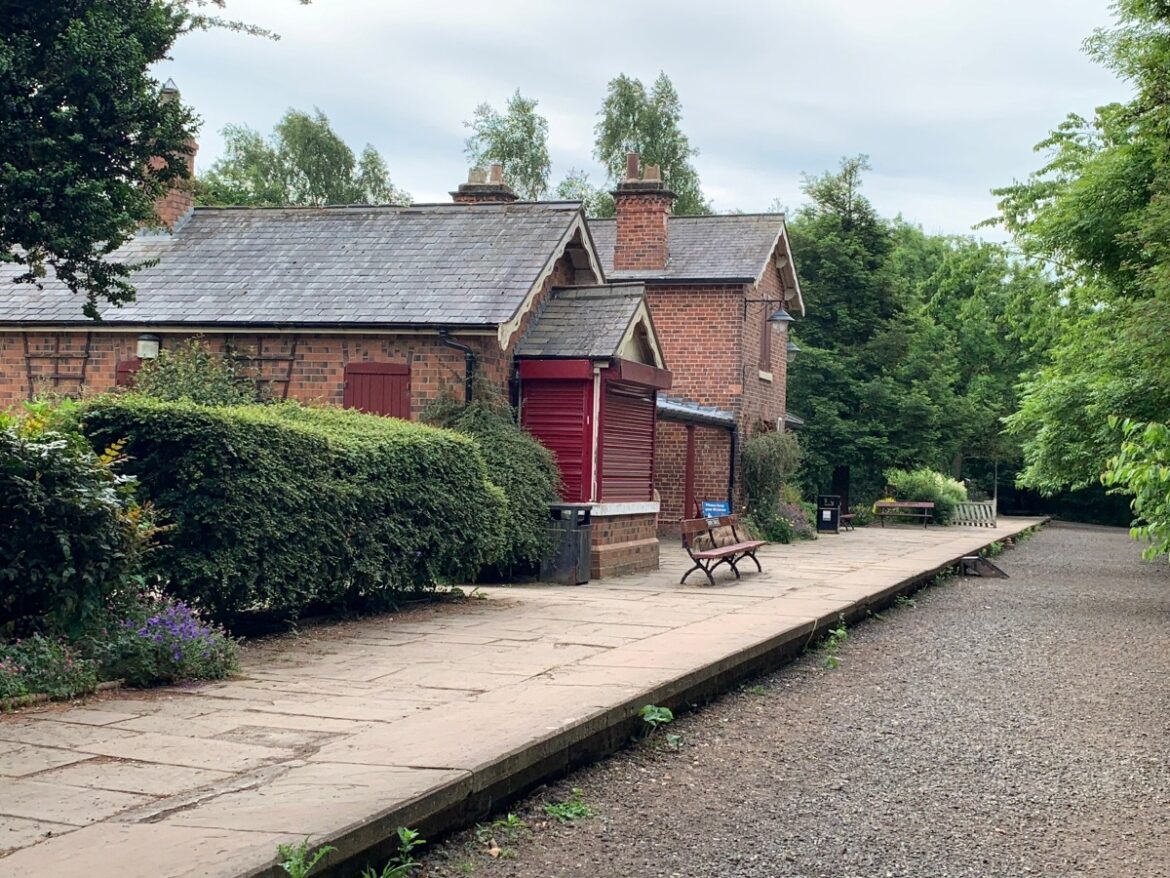
Today, Wynyard Woodland Park is one of Teesside’s most popular places for a peaceful walk, cycle ride or family day out. With its tree-lined paths, old railway station café and children’s play area, it is difficult to imagine that steam trains once thundered through this quiet stretch of countryside.
Yet the park, formerly known as the Castle Eden Walkway, has a fascinating railway history stretching back nearly 150 years. It even welcomed royalty, while nearby lie the remains of a forgotten medieval church.
The Castle Eden Railway
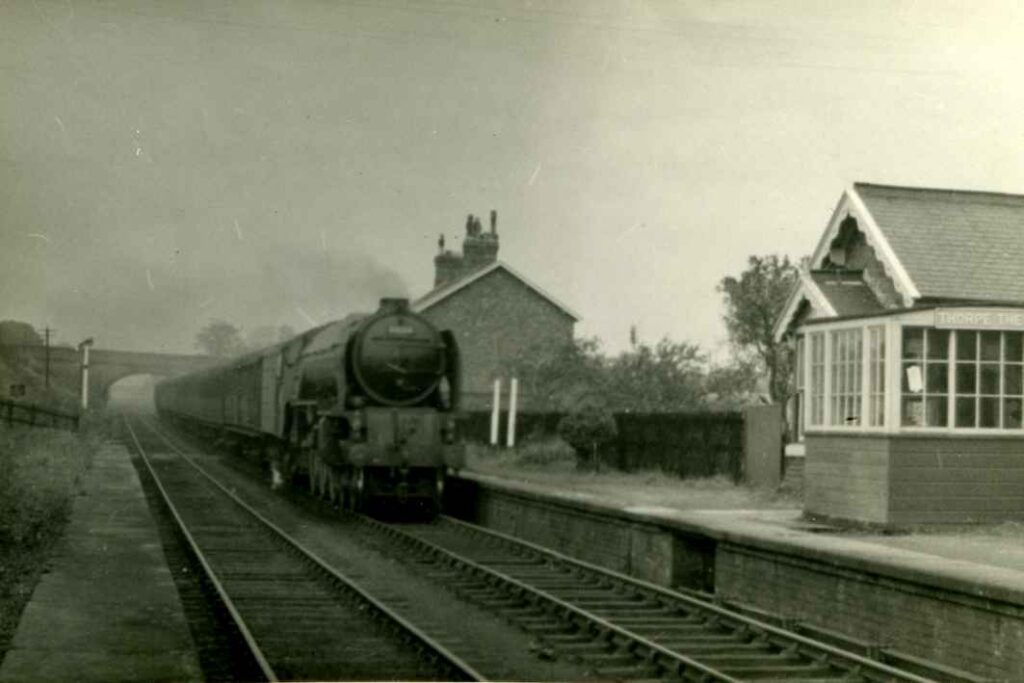
A train passing through Thorpe Thewles station in the 1960s.
The story begins in the 1870s, when the North Eastern Railway constructed a new route linking Stockton with the coalfields and railway network of County Durham.
Known as the Castle Eden Branch, the line ran north from Bowesfield Junction, near Stockton, passing Thorpe Thewles and Wynyard before joining other routes towards Sunderland and Tyneside.
Goods trains began operating through Thorpe Thewles in 1878, with passenger services following in March 1880.
Although the railway served several small rural communities, its main purpose was industrial. Trains carried coal, limestone and other materials between the Durham coalfields, Teesside’s growing industries and the ports of the North East.
Thorpe Thewles station was also an important local goods facility, handling livestock, hay and agricultural produce. Coal drops allowed fuel to be delivered and distributed to nearby homes and businesses.
Passenger traffic, however, was never particularly heavy. The surrounding villages were small, and the railway was principally a useful alternative route for freight trains.
Royal Trains and Famous Visitors
Despite its rural location, Thorpe Thewles station occasionally welcomed some very distinguished passengers.
Between 1901 and 1910, the royal train reportedly called at the station on five occasions, carrying King Edward VII and members of the royal household visiting nearby Wynyard Hall.
The King was a close friend of Charles Vane-Tempest-Stewart, the 6th Marquess of Londonderry, whose magnificent country house was a favourite destination for royal visitors.
In 1903, Edward VII even held a meeting of the Privy Council at Wynyard Hall during one of his visits.
Another rather more controversial visitor arrived in 1936, when Joachim von Ribbentrop, then Germany’s ambassador to Britain and later Nazi foreign minister, travelled to the area to visit the 7th Marquess of Londonderry.
The visit was associated with the Marquess’s controversial efforts to cultivate relations with Nazi Germany. Accounts describe Wynyard estate staff lining the route from Thorpe Thewles station carrying swastika flags.
The Lost Thorpe Thewles Viaduct
One of the railway’s most impressive features was the enormous brick viaduct which carried trains across the Thorpe Beck valley, just south of the station.
Constructed during the 1870s, it contained around eight million bricks and cost approximately £37,000 to build.
For generations, the viaduct was a familiar landmark, with its great arches towering above the surrounding countryside.
During the Second World War, defensive pillboxes were built nearby, and bombs fell close to the viaduct during an enemy air raid in 1941.
Sadly, the structure did not survive the railway’s closure. Having fallen into disrepair, it was demolished using explosives on 3 June 1979, with crowds gathering to watch its destruction.
The demolition also made way for improvements to the A177 road.
Today, walkers following the former railway towards Stockton must leave the original trackbed where the viaduct once stood.
From Railway to Woodland Walkway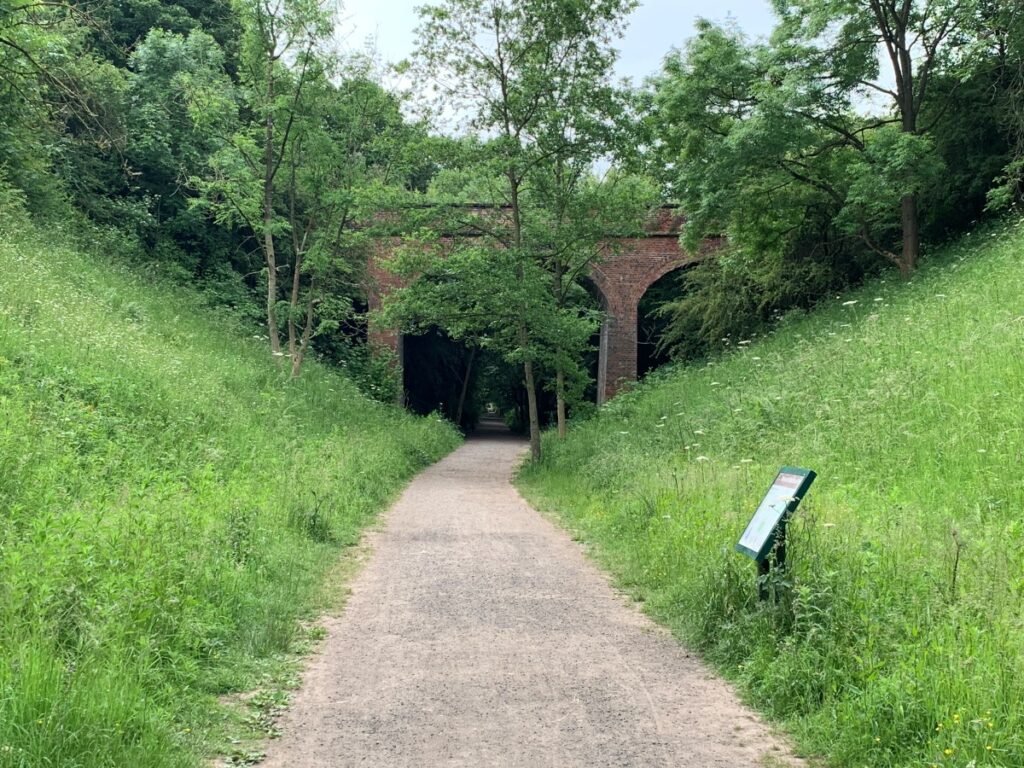
Thorpe Thewles station closed to passengers on 2 November 1931, although goods services continued until April 1951.
Trains continued to pass through for several more years, but the Castle Eden Branch finally fell silent during the 1960s, with the route closing completely by 1968.
For a time, the abandoned railway became overgrown and forgotten.
Then, in 1977, Cleveland County Council acquired a section of the former trackbed, with financial assistance from the Department of the Environment and Countryside Commission.
The railway was transformed into a walking and cycling route, opening to the public as the Castle Eden Walkway in the early 1980s.
In 1983, the former stationmaster’s house at Thorpe Thewles reopened as a visitor centre, giving the old railway buildings a new purpose.
The surrounding area subsequently became known as Wynyard Woodland Park.
Today, the park extends for around three miles, with the old railway forming part of National Cycle Network Route 1.
Thorpe Thewles station remains a popular starting point, complete with a tea room, children’s adventure playground and surviving railway features, including the former platform and coal drops.
The Forgotten Church at Grindon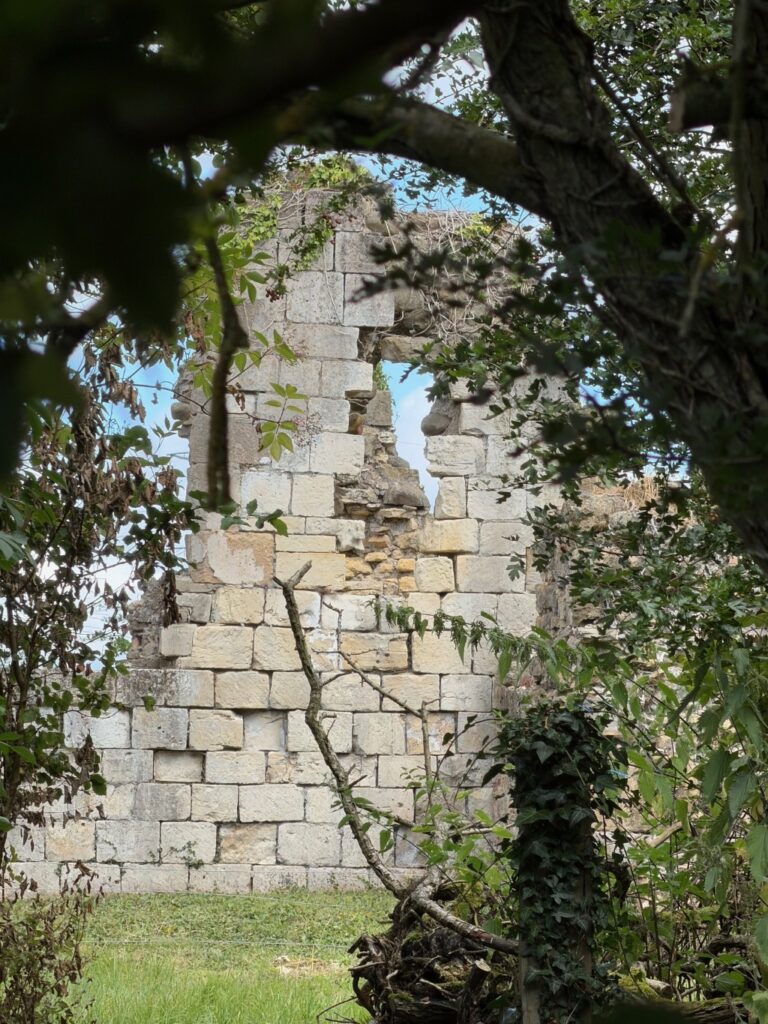
Just off the walkway stand the atmospheric ruins of St Thomas à Becket Church at Grindon, a medieval parish church with origins dating back to the 12th century.
The church served the local community for hundreds of years, but by the 19th century the population had shifted towards Thorpe Thewles.
It was replaced by a new parish church in 1848–49 and gradually fell into ruin. By the 1880s, its roof had disappeared.
Interestingly, when the Castle Eden Walkway first opened, visitors were encouraged to make a short detour to explore the church ruins. Cleveland County Council even arranged for the site to be cleared and surveyed in 1982.
However, public access was subsequently withdrawn, and the ruins are now fenced off on private land because of their dangerous condition.
The remains are a scheduled monument, providing another reminder of the area’s much older history.
A Railway Remembered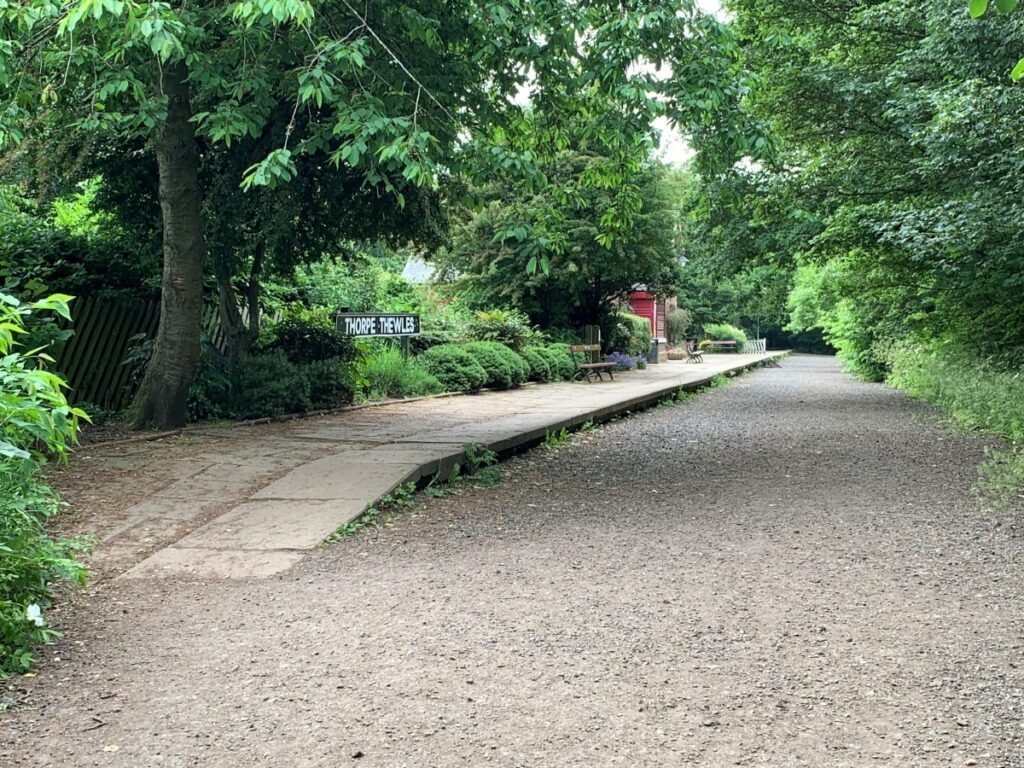
Although the rails disappeared decades ago, there are still plenty of reminders of the Castle Eden Railway.
The old station buildings, platforms, bridges, cuttings and coal drops help visitors picture a time when this peaceful woodland route echoed to the sounds of steam locomotives.
Today, the trains have been replaced by walkers, cyclists and families enjoying the countryside.
And perhaps that is the most fitting legacy of the old railway: a route originally built to serve Teesside’s industries has become a much-loved green space for future generations.
Do you remember the Castle Eden Walkway in its early days, or even the railway before it closed? Perhaps you remember the great Thorpe Thewles Viaduct? We’d love to hear your memories in the comments.