
Today, the land beside Middlesbrough Central Library and the Magistrates’ Court is largely unremarkable. Part of it is used for car parking, surrounded by familiar town-centre buildings and busy roads.
But go back a century and the scene was very different.
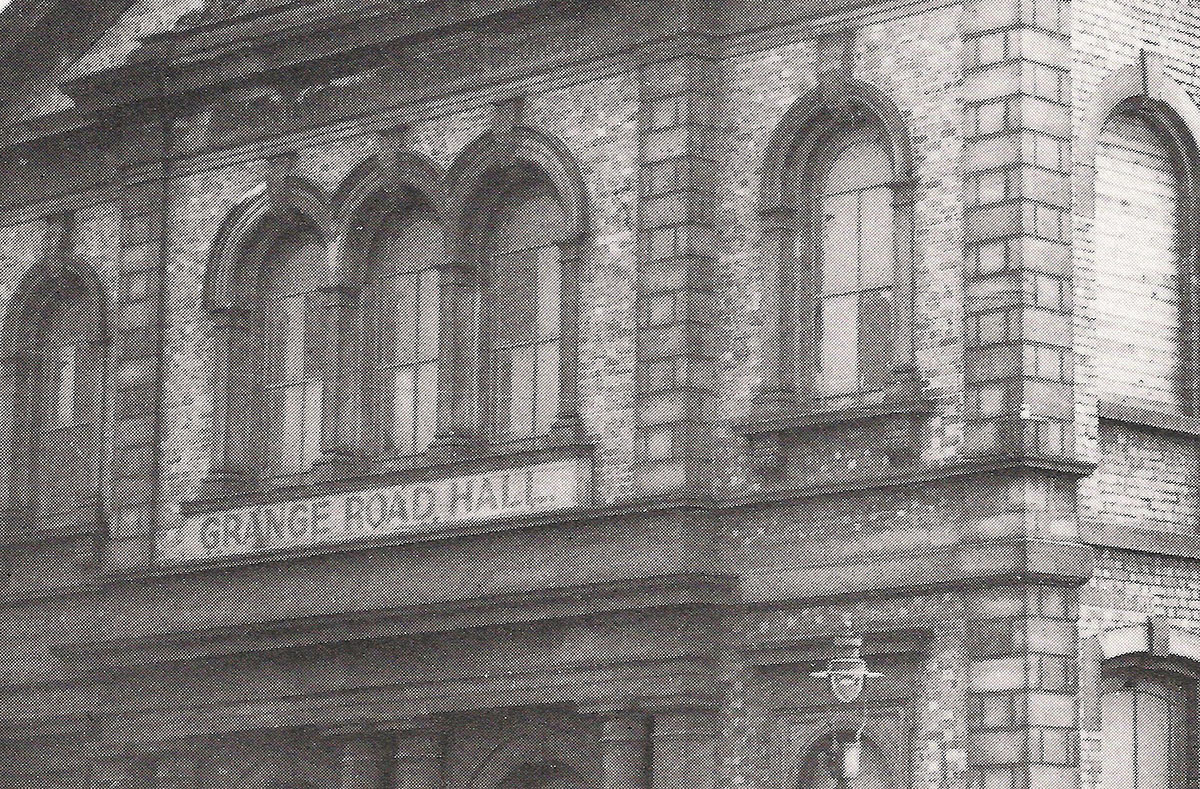
Standing prominently on Grange Road was a substantial Victorian Methodist church known as Grange Road United Methodist Church, and later as Grange Road Hall.
For generations it was a familiar Middlesbrough landmark. Yet the building disappeared in 1959, and even the police station which replaced it has since been demolished.
So, what was Grange Road Hall, and why was such a large church built here?
Methodism Arrives in Middlesbrough
Methodism has a surprisingly long association with Middlesbrough – stretching back almost as far as the town itself.
In fact, the Methodists were reportedly the first denomination to construct a dedicated place of worship in the rapidly developing new town.
A small Methodist chapel opened in West Street in 1833, when Middlesbrough was still in its infancy. Just six years later, the congregation had already outgrown it and a larger chapel capable of accommodating around 500 worshippers opened on the north-west corner of the Market Place.
As Middlesbrough’s population exploded during the Victorian period, Methodism expanded with it.
Different branches of the Methodist movement established chapels around the town, including the United Methodist Free Churches.
From Linthorpe Road to Grange Road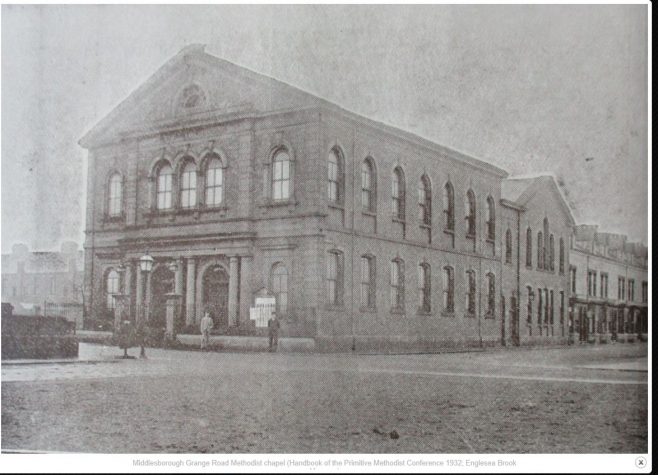
The congregation which would eventually occupy Grange Road initially worshipped in a United Methodist Free Church on Linthorpe Road, opened in February 1859.
By the 1870s, however, another move was required.
In 1877, the Linthorpe Road chapel closed and the congregation transferred to a substantial new church on Grange Road. Contemporary records describe it as occupying a very central position in the rapidly growing town.
The building stood close to Victoria Square, at the junction of Grange Road and Dunning Road – roughly where the later police station would stand.
It was an impressive structure.
Historic photographs show a large Victorian chapel with a tall central frontage, arched windows and entrances facing the street. Its scale gives some indication of both the popularity of Methodism and the rapidly increasing population of Middlesbrough at the time.
Middlesbrough’s Forgotten Methodist Church
The ‘Big Wesley’ Methodist Church
Today, other Methodist buildings are probably better remembered.
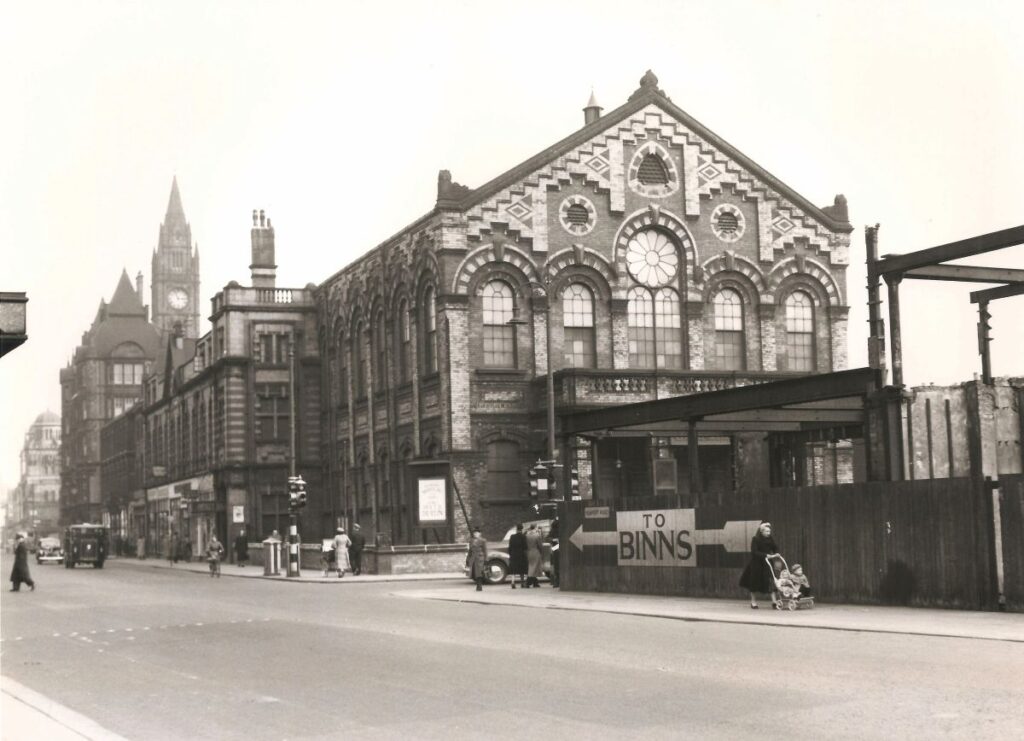
Perhaps the most famous was the enormous Wesleyan Methodist Church at the junction of Corporation Road, Newport Road and Linthorpe Road, popularly remembered as the “Big Wesley”.
Another impressive Methodist church opened further along Linthorpe Road in 1892.
These later buildings perhaps overshadowed Grange Road in Middlesbrough’s collective memory, but the older chapel remained an important part of the town’s religious life.
Indeed, it was sufficiently large and prominent to play a small but interesting role in Methodist history.
A Historic Conference in 1932
In June 1932, Middlesbrough hosted the final conference of the Primitive Methodist Church before the denomination became part of the newly united Methodist Church later that year.
Although Grange Road was a United Methodist rather than Primitive Methodist chapel, at least one of the conference services was held there.
There was nothing particularly unusual about one Methodist denomination borrowing another’s building for a large gathering, particularly when substantial accommodation was required.
A photograph of Grange Road chapel even appeared in the handbook produced for the historic 1932 conference.
Only a few months later, the Wesleyan Methodist Church, Primitive Methodist Church and United Methodist Church formally joined together to create the Methodist Church of Great Britain.
From Church to Grange Road Hall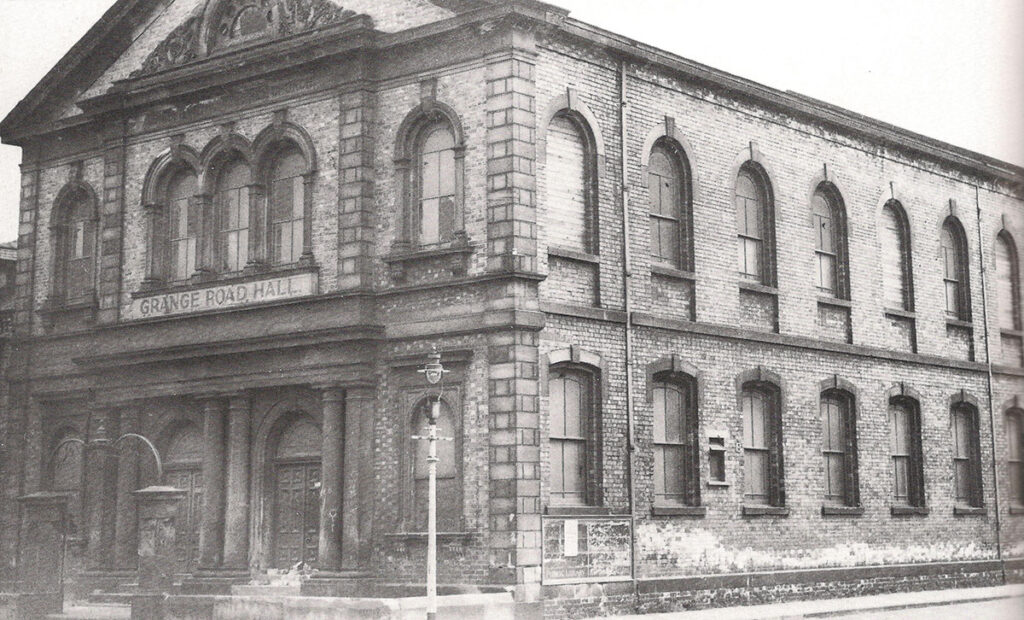
The precise chronology of the building’s later religious use is slightly unclear.
A history of the church was produced covering the years 1877–1927, suggesting that 1927 may have represented a significant change in its story.
There is evidence that from 1927 until 1957, the building – together with the nearby Carnegie Library – was used to house parts of Middlesbrough’s growing art collection.
Marriage records survive for Grange Road United Methodist Church into the 1930s, although it no longer appears in Methodist statistical returns by 1940.
At some point the former church became better known simply as Grange Road Hall.
For many older Middlesbrough residents, it was this name rather than its original church title that would have been familiar.
Demolished for Middlesbrough Police Station
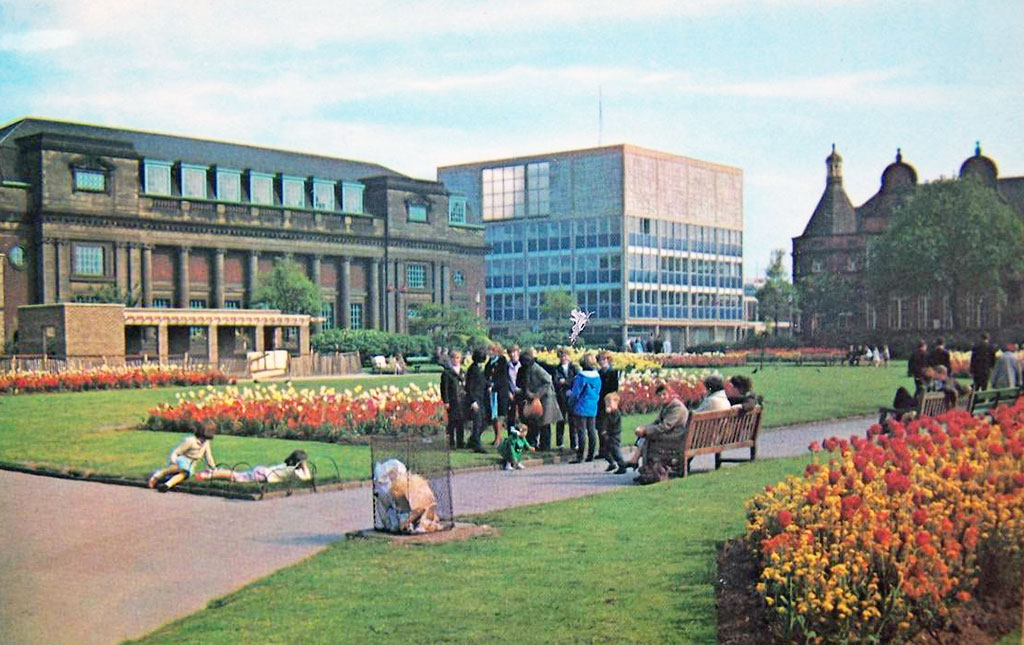
Middlesbrough Police Station was built on the site of the church. Seen here in the 1960s.
Grange Road Hall survived into the post-war era, but its days were numbered.
In 1959, after standing for more than 80 years, the former church was demolished.
The reason was another major change to this part of Middlesbrough town centre: the construction of a new police station.
The Victorian chapel disappeared and a modern police headquarters eventually occupied the site.
It was a familiar building to generations of Middlesbrough residents, but remarkably, this too has now vanished.
The former police station was demolished as policing operations moved elsewhere, leaving much of the land as the car parking area seen today.
It means the site has undergone an extraordinary transformation over the years.
A Lost Middlesbrough Landmark
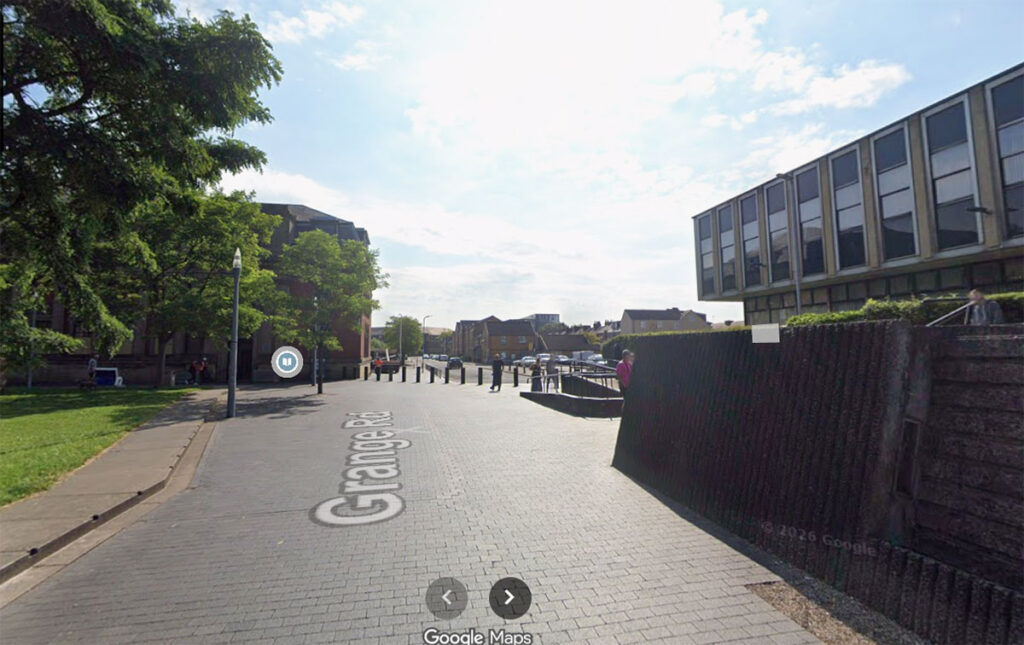
This Google Maps view shows the site of the former church and police station on Grange Road is empty and used as a car park.
Stand near Middlesbrough Central Library today and there is very little to suggest that hundreds of worshippers once filed into an imposing Methodist church on the neighbouring site.
That’s what makes Grange Road Hall such an interesting example of Lost Teesside.
Middlesbrough has changed enormously since the late Victorian period, and some of its most substantial buildings have disappeared so completely that it can be difficult to imagine they ever existed.
Grange Road United Methodist Church was not a small backstreet chapel. It was a large, prominent town-centre building which stood for more than eight decades and played a part in the religious and community life of Victorian and early 20th-century Middlesbrough.
Yet today, both it and the building which replaced it have disappeared.
Next time you’re passing the Central Library or Magistrates’ Court, take a look towards the neighbouring car park.
More than a century ago, the view would have been dominated by one of Middlesbrough’s forgotten Victorian churches.