
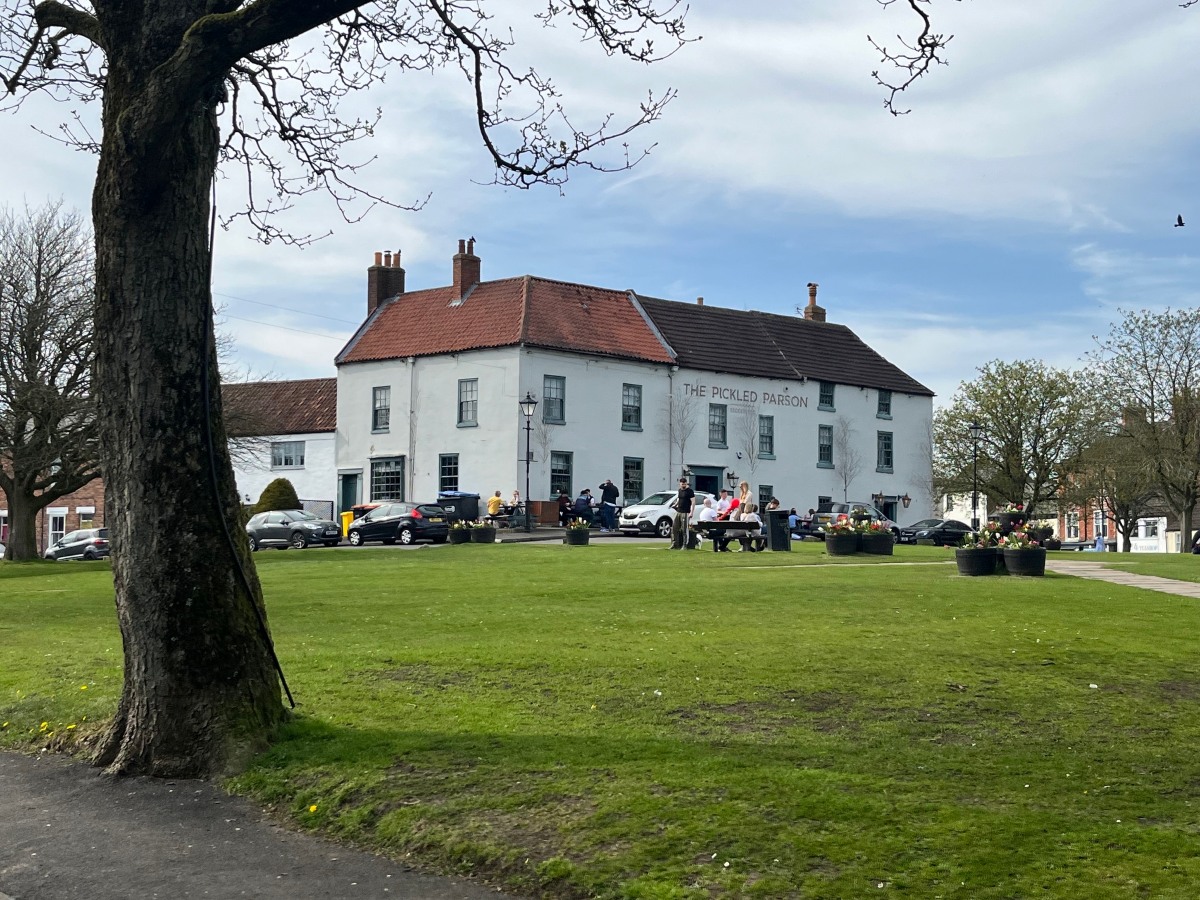
Sedgefield is one of County Durham’s most attractive small towns, with its historic church, traditional pubs, Georgian buildings and pleasant village green. Situated just north of Teesside, it has long been a popular place to live, particularly for those commuting to Stockton, Middlesbrough, Darlington and Hartlepool.
But behind its peaceful appearance lies a surprisingly rich history stretching back nearly 2,000 years.
The Romans established a settlement here, medieval bishops granted the town the right to hold markets, and wealthy landowners later created grand houses and landscaped gardens. Sedgefield has also witnessed stagecoaches, horse racing, unusual local traditions and even the legend of a pickled clergyman!
Although much of the town’s present appearance dates from the 18th and 19th centuries, its origins are considerably older. The name Ceddesfeld appears in records as early as AD 915, possibly meaning ‘Cedd’s Field’, after an early landowner.
Today, many reminders of this fascinating past can still be discovered on a walk around Sedgefield and its surroundings.
St Edmund’s Church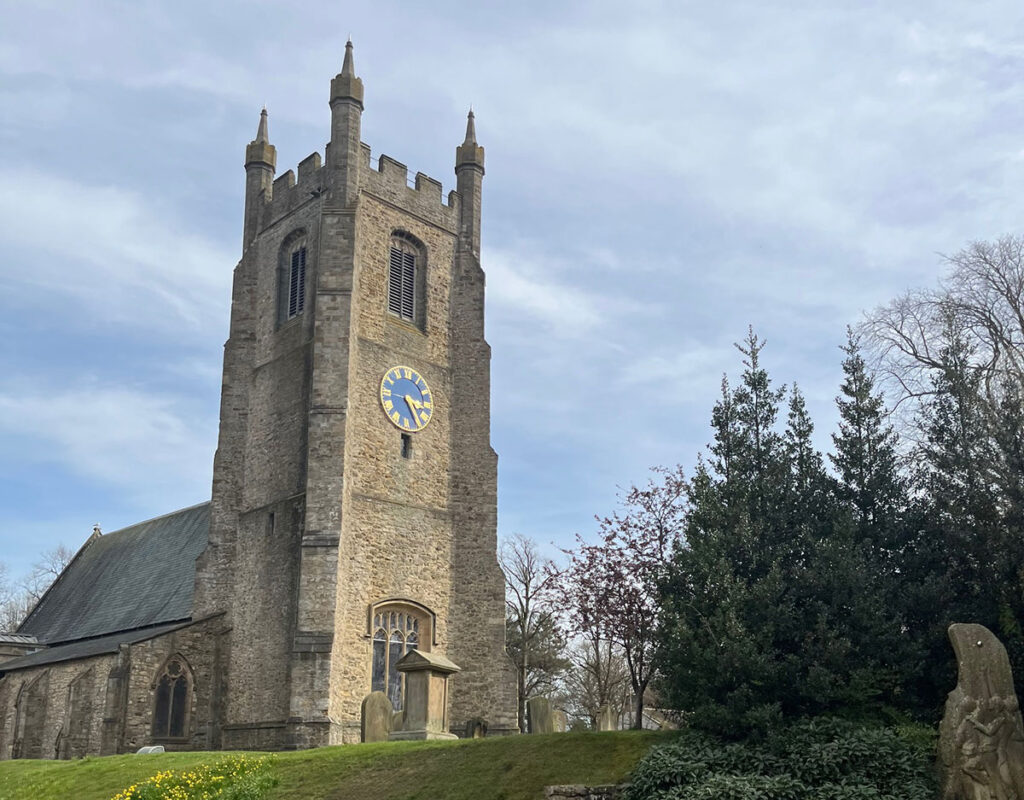
Dominating the centre of Sedgefield is the magnificent Church of St Edmund, one of the town’s most recognisable landmarks.
The present church largely dates from the 13th century, although there is thought to have been a place of worship here for much longer, possibly beginning with a wooden church in Anglo-Saxon times.
Its impressive tower was added in the 15th century, and the church’s elevated position means it can be seen from some distance across the surrounding countryside.
Inside are a number of historic treasures, including fine 17th-century carved woodwork associated with the ecclesiastical style of Bishop John Cosin. There are also memorials and architectural features reflecting the church’s long association with prominent local families.
For centuries, St Edmund’s was at the centre of village life. Its bells marked the passing hours, called parishioners to worship and sounded on important occasions.
The church remains one of the finest historic buildings in Sedgefield and is well worth exploring.
The Village Green and Market Cross
The attractive green at the heart of Sedgefield is another reminder of the town’s medieval past.
In 1312, Richard de Kellawe, Bishop of Durham, granted Sedgefield a charter allowing it to hold a weekly market on Fridays, together with an annual fair associated with the feast of St Edmund.
This helped establish Sedgefield as an important local trading centre for the surrounding agricultural communities.
Farmers, merchants and villagers would gather to buy and sell livestock, produce and household goods, while the nearby inns provided accommodation and refreshments for travellers.
The original market cross disappeared during the 19th century, but a modern replacement was erected in 2012 to celebrate the 700th anniversary of the charter.
It was unveiled by the Princess Royal and provides a reminder that Sedgefield was once much more than a quiet rural settlement.
The town still maintains its market tradition, with a regular farmers’ market held in the centre.
Ceddesfeld Hall and the Pickled Parson
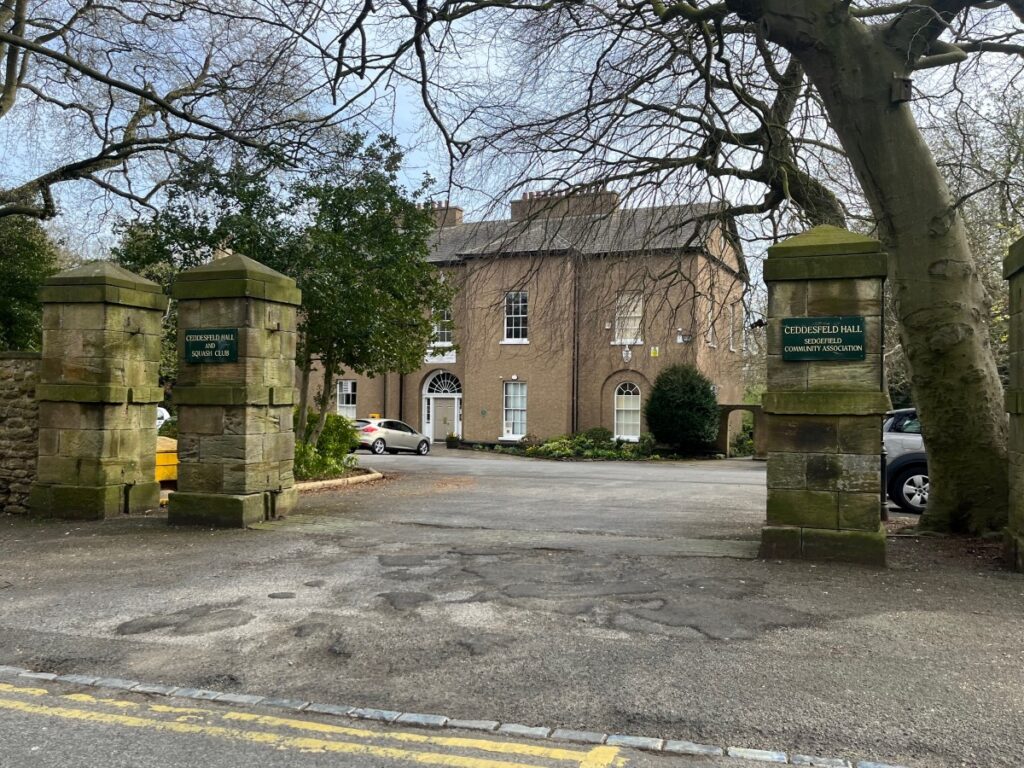
Ceddesfield Hall
Just a short distance from the church stands Ceddesfeld Hall, an impressive Georgian building that once served as the rectory for St Edmund’s.
The present building dates from 1793, when it was constructed for the Reverend George Barrington, replacing an earlier rectory that had been destroyed by fire.
Its name preserves one of the earliest recorded forms of Sedgefield, Ceddesfeld.
Today, the building is home to Sedgefield Community Association and continues to play an important role in local life.
The grounds are also historically significant. Their formal gardens were developed during the 18th century, with designs associated with Joseph Spence, a noted scholar and landscape designer.
However, Ceddesfeld Hall is perhaps most famous for one of County Durham’s strangest ghost stories.
The Pickled Parson
According to the legend of the Pickled Parson, a rector of Sedgefield died shortly before the annual collection of tithes, payments that formed part of his income.
Fearing that she would lose the money, his widow supposedly preserved his body in salt and concealed his death until the payments had been collected.
The unfortunate clergyman was then said to haunt the old rectory, earning the nickname by which he is still remembered today.
The story has traditionally been associated with the Reverend John Gamage, who died in 1747. However, recent historical research has uncovered a possible earlier origin for the tale during the English Civil War, involving another Sedgefield rector, John Vincent, who died in 1646. The precise truth remains uncertain, but the legend has survived for centuries.
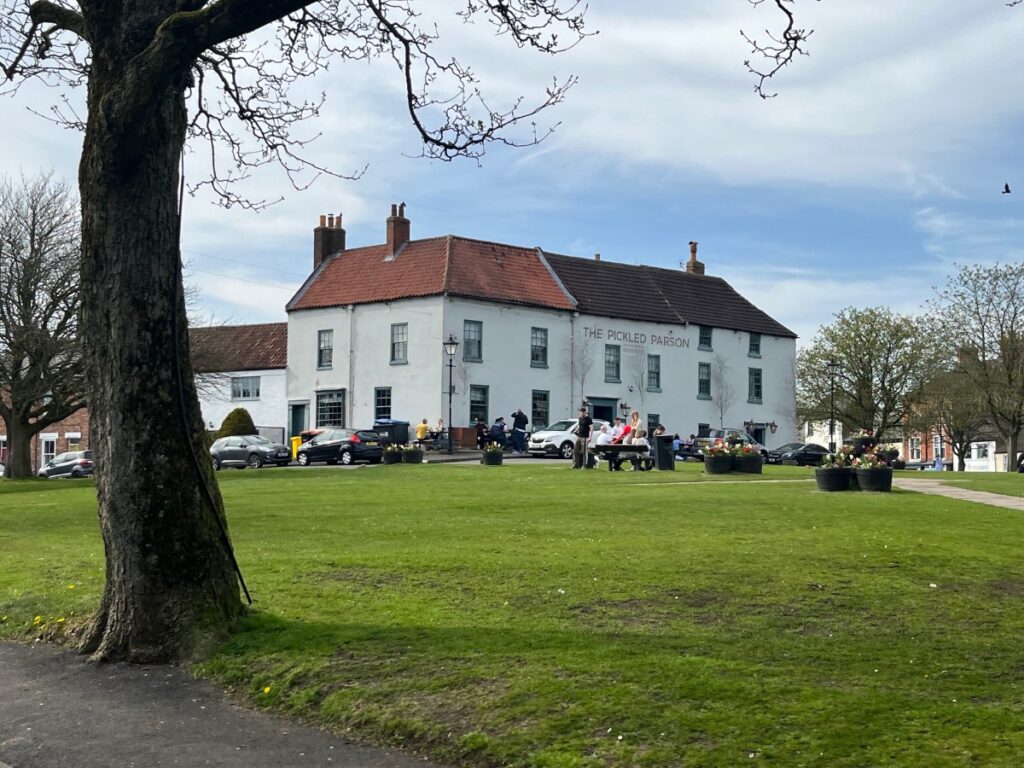
The name lives on in the Pickled Parson pub and restaurant overlooking the village green.
The Hardwick Arms Hotel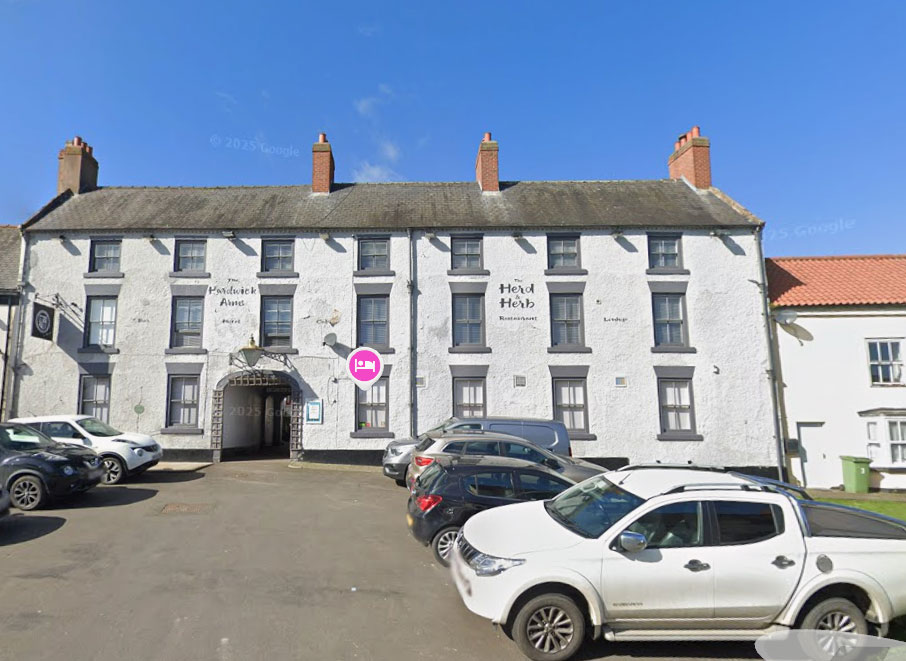
The Hardwick Arms is one of Sedgefield’s most historic inns, standing in a prominent position overlooking the village green.
Long before the arrival of modern roads and motor vehicles, Sedgefield was an important stopping point for travellers moving between the towns and cities of the North East and Yorkshire.
The Hardwick Arms became a coaching inn, providing food, accommodation and fresh horses for passengers travelling by stagecoach.
Coaches on routes between Newcastle and Leeds were among those that stopped here, bringing a steady stream of travellers through the town.
The inn’s arched entrance recalls the days when horse-drawn vehicles passed through to the yard and stables behind.
Some of the original stable buildings survive, although they have since been converted into residential accommodation.
The arrival of the railways changed the coaching trade, but Sedgefield was never served by a main-line passenger station in its centre. Instead, horse-drawn vehicles and later road transport connected the town with nearby railway stations.
The Hardwick Arms has survived these changes and remains a reminder of Sedgefield’s importance as a stopping place on historic transport routes.
Hardwick Hall and Country Park
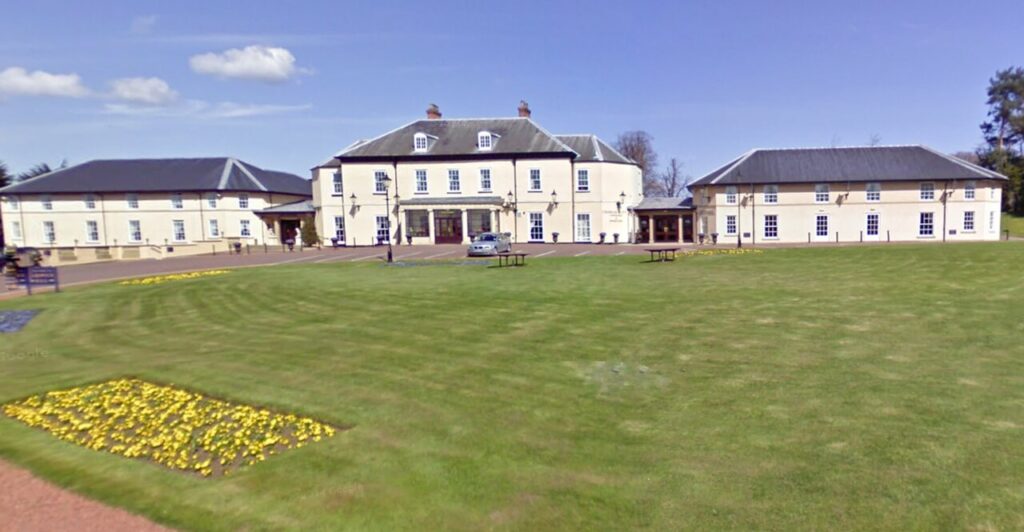
By Maypm – Own work, CC BY-SA 4.0, https://commons.wikimedia.org/w/index.php?curid=38719362
A short distance west of Sedgefield lies Hardwick Hall and its surrounding country park, one of the area’s most popular places for a walk.
The hall has a history stretching back to the 17th century, with parts of the building dating from around 1634. Over the years it has been associated with several prominent families, including the Frevilles, Lambtons, Burdons and Russell families.
During the 18th century, the estate was transformed by John Burdon, who had ambitious plans to create an impressive country residence surrounded by fashionable landscaped gardens.
In 1754, he commissioned the architect James Paine to help realise his vision.
The result was a remarkable landscape of winding paths, ornamental lakes, temples and Gothic follies, designed to surprise and delight visitors.
Among the surviving features are the Serpentine Lake, the Temple of Minerva and the remains of a mock ruined castle.
The latter is particularly interesting because it incorporates medieval stonework brought from Guisborough Priory, linking the park with another important historic site in the region.
Burdon’s plans for a grand new mansion were never fully completed, partly because of his financial difficulties, but much of the landscape survived.
In more recent times, the estate underwent further changes. Hardwick Hall was used as a maternity home during the mid-20th century, before eventually becoming the hotel and events venue familiar today.
The surrounding park was later acquired in part by Durham County Council and has undergone substantial restoration, allowing visitors to appreciate the landscape much as its 18th-century creators intended.
The Roman Road and Settlement
One of Sedgefield’s most remarkable historic discoveries lies beneath the fields between the town and Hardwick Park.
During the Roman occupation of Britain, an important road known today as Cade’s Road passed through this area, linking settlements in Yorkshire with those further north towards Chester-le-Street.
Alongside the road developed a substantial Romano-British settlement, occupied from around the 2nd century AD and continuing into the later Roman period.
The remains were identified through archaeological investigations and featured in Channel 4’s Time Team programme in the early 2000s.
Excavations revealed a fascinating arrangement of plots, enclosures and timber buildings alongside the road, forming what archaeologists describe as a ‘ladder settlement’.
There was evidence of pottery production, metalworking, farming and trade, suggesting that the settlement was a busy centre of everyday life.
What makes the discovery particularly interesting is that, unlike many Roman settlements in northern England, it does not appear to have developed around a military fort.
Instead, it offers a rare glimpse into the lives of ordinary civilians living and working in Roman Britain.
Archaeological interest has continued into recent years, with Durham University undertaking further excavations at East Park in June 2026. These investigations are helping to reveal more about the settlement’s buildings, industries and inhabitants.
Sedgefield Racecourse
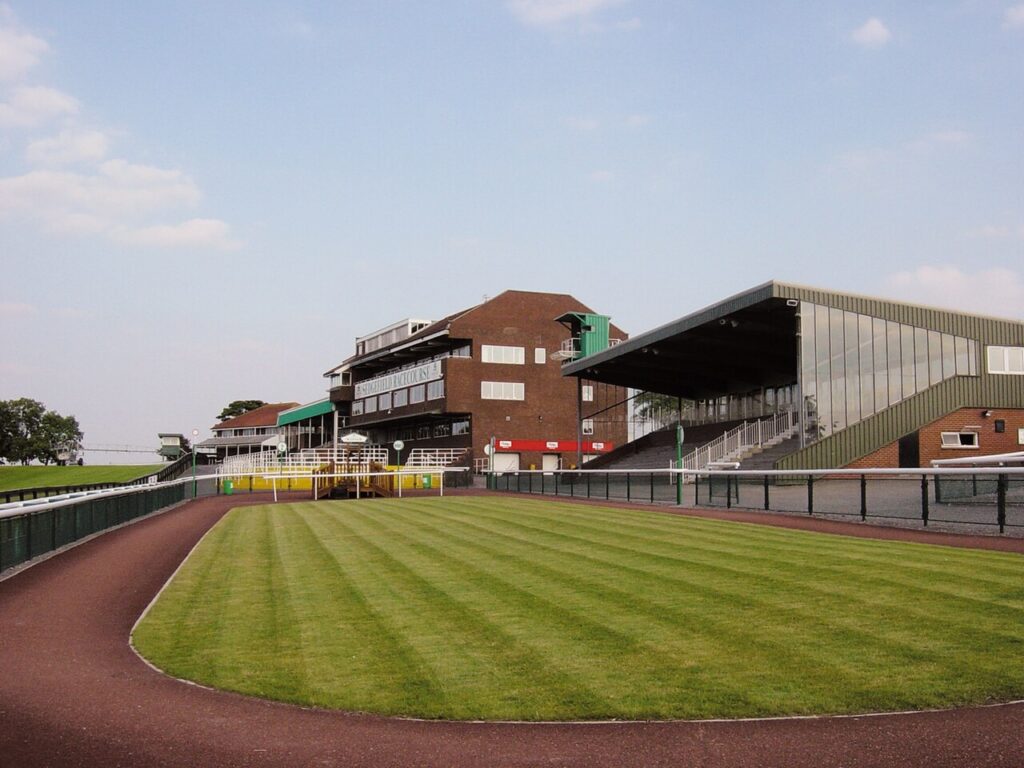
Jill Williamson/Sue-Lee Rowlands of Sedgefield Racecourse, CC BY-SA 3.0, via Wikimedia Commons
Horse racing is another important part of Sedgefield’s history.
The town’s racecourse, situated to the south-west of the centre, has roots in the 19th century, when racing became an increasingly popular pastime across Britain.
The course developed into a recognised venue for National Hunt racing, attracting spectators from County Durham, Teesside and beyond.
Unlike some of Britain’s grander racecourses, Sedgefield has retained a distinctly local character, with its compact setting and close views of the action.
The racecourse remains active today, making it one of the town’s most enduring sporting traditions.
The Ancient Sedgefield Ball Game
One of Sedgefield’s most unusual traditions takes place every Shrove Tuesday, when the normally peaceful town centre becomes the setting for a centuries-old ball game.
The Sedgefield Ball Game is believed to date back to medieval times, with local tradition tracing it to 1325.
Originally associated with competition between farmers and tradesmen, it is a form of traditional mass football, played through the streets rather than on a conventional pitch.
There are no ordinary football teams, and the rules are very different from the modern game. Players compete to carry the specially made ball towards designated goals at opposite ends of the town.
The game can attract large crowds and is an important part of Sedgefield’s identity.
A statue near St Edmund’s Church commemorates the tradition. Created by sculptor David France and installed in 2000, it depicts the historic game and provides another unusual sight for visitors.
Winterton Hospital: A Lost Sedgefield Landmark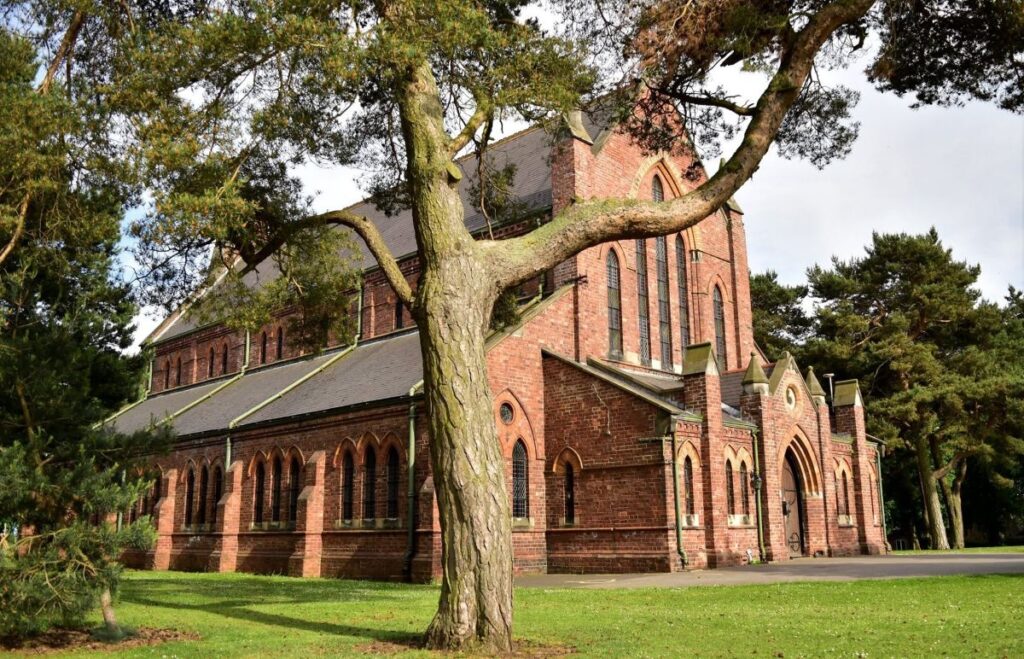
Another important chapter in Sedgefield’s history is that of Winterton Hospital, which once occupied an extensive site on the outskirts of the town.
Originally opened in 1858 as the Durham County Lunatic Asylum, it developed into a major psychiatric hospital, eventually accommodating more than 2,000 patients.
For generations, the institution was one of the area’s largest employers, with its extensive buildings, grounds and supporting facilities forming a community almost separate from Sedgefield itself.
Changing approaches to mental healthcare led to the hospital’s closure in 1996, and most of the buildings were subsequently demolished to make way for the Winterton Park residential development.
One important survivor is the former hospital chapel, St Luke’s Church, a Grade II listed building that recalls the site’s Victorian origins. Recent plans have been filed to turn the former church into flats.
For many local families, Winterton remains an important part of Sedgefield’s recent history, particularly for those who worked there or remember its extensive buildings.
Sedgefield Today
Despite the growth of modern housing around its outskirts, Sedgefield has retained much of its historic character.
Its village green, church, old inns and Georgian buildings still give the centre an atmosphere that has changed relatively little compared with many other towns in the region.
For visitors, it is an enjoyable place to explore on foot, with plenty of opportunities to discover the stories behind its buildings.
From the remains of Roman workshops and medieval markets to Georgian country estates, stagecoaches and ghostly legends, Sedgefield has witnessed almost every period of the region’s history.
And that is perhaps its greatest attraction: behind the appearance of a quiet County Durham market town lies a much bigger story waiting to be discovered.